Beekeeping in the Snow?
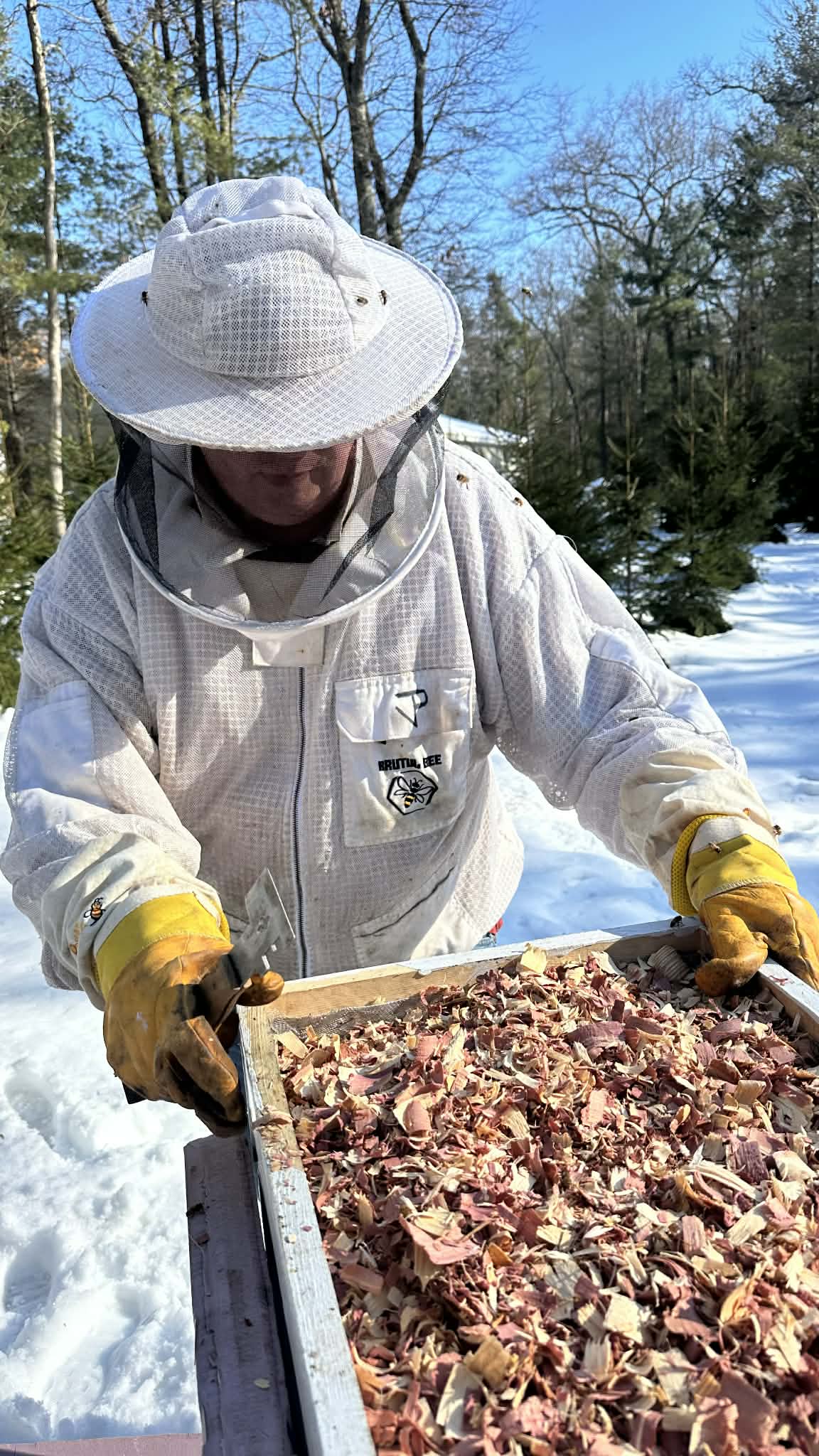
I don’t normally suggest opening your hives in the snow.
But today was one of those rare winter gifts, sunshine and just above 40°F , warm enough for a quick feed check while the bees were flying.
If temperatures climb above 40°F and you see activity at the entrance, it is safe to offer supplemental feed. Late winter and early spring is when colonies often run out of stores. If you are quick, you can pop the lid and help them out. We simply add dry sugar to the inner cover.
We always leave our bees plenty of honey going into winter, but a little extra help this time of year never hurts.
The hard part of beekeeping
Walking out to the apiary today, we already suspected we had lost one hive.
Paul has been checking them all winter with our thermal camera and had a feeling one hive was gone.
He was right… but also wrong.
We lost two.
Beekeeping is heartbreaking sometimes. You invest time, money, and a lot of care into these colonies. Losses happen every year, and winter survival is never guaranteed. So when most of your bees make it through, you learn to be grateful.
If you’re thinking about keeping bees, my goal is to share our mistakes so maybe you can skip a few of them (and make your own instead 😉).
When we first started, winter survival was HARD for us. Looking back, the biggest issues were:
- Not enough food
- Poor airflow
- Too much moisture
Food matters more than you think
Having enough winter stores is incredibly important, especially where we live near Lake Michigan.
It does not sound like a big deal, but the lake keeps us colder longer. We have talked with beekeepers just a few miles inland who start spring earlier than we do. Our bees burn more food simply because winter hangs on.
Moisture is the real enemy
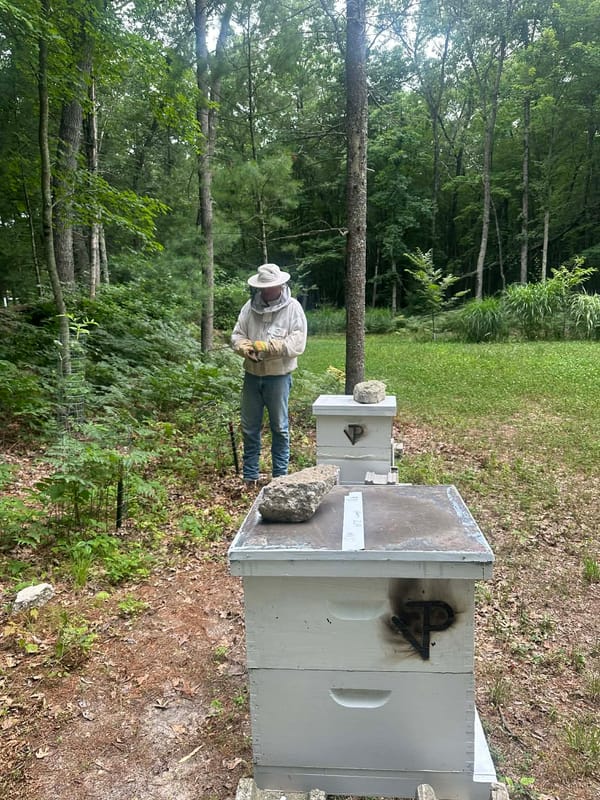
When we started, our hives sat on cinder blocks because that’s what we had available to us.
Later, Paul built wooden stands, and our winter survival improved.
Better airflow = less moisture.
And moisture kills more colonies than cold ever will.
In early spring, melting snow creates condensation inside the hive right when you think they have survived the worst. That’s why the quilt box is such an important piece of winter equipment. When we open ours, the wood chips are usually damp, which means it’s working. If we can we will take out the wet chips and replace them just to make it thru this last bit of winter.
Next week I will be breaking down the different options when it comes to buying bees. Do you want a Nuc or a Package? Can you get your bees local or should you choose someone out of state? I will tell you everything I have personally learned and share with you my opinion on the subject.
If you are thinking about starting your own hives or adding to what you currently have you won't want to miss it!
Stay tuned, PVT Bee Ranch