What Makes up a Bee Hive?
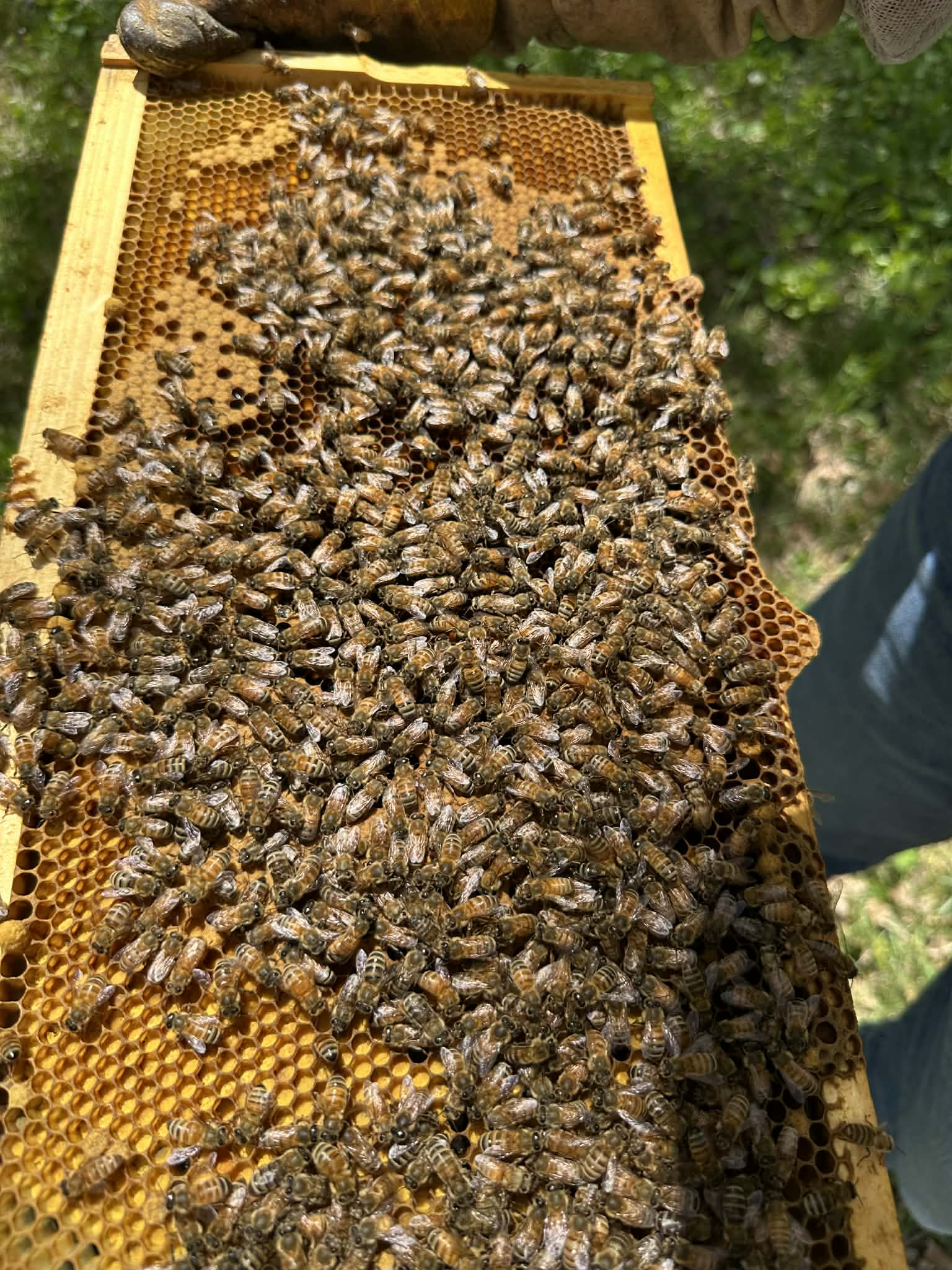
Inside the Hive: What Makes a Bee Colony Work?
When most people think of a beehive, they picture a wooden box sitting in a field with bees flying in and out. But inside that box is an incredibly organized and complex little world.
A healthy hive is made up of three types of bees, each with a specific role that keeps the colony running smoothly: the queen, worker bees, and drones. Every bee has a job, and the success of the hive depends on how well they work together.
The Queen Bee
The queen is the heart of the hive. Her primary job is to lay eggs and keep the colony growing. During peak season she can lay 1,500–2,000 eggs per day. She also releases pheromones that help regulate the behavior and unity of the colony.
There is usually only one queen per hive, and the worker bees care for her by feeding and grooming her while she focuses on laying eggs.
Worker Bees
Worker bees make up the majority of the colony and are all female. These bees do almost everything needed to keep the hive functioning.
Depending on their age, their jobs change throughout their short lives. Worker bees may:
- Clean the hive
- Feed larvae
- Build honeycomb with wax
- Guard the entrance
- Regulate hive temperature
- Forage for nectar, pollen, propolis, and water
When you see bees flying from flower to flower, those are worker bees gathering the resources the colony needs to survive.
I think one of the most interesting things is that the foraging bees are always the oldest bees in the hive.
Drones
Drones are the male bees of the colony. Their primary purpose is to mate with a queen from another hive.
Unlike worker bees, drones do not gather nectar or pollen and they do not have stingers. They rely on the worker bees for food and care while they are in the hive.
As fall approaches and resources become scarce, drones are often pushed out of the hive because they no longer serve a purpose going into winter.
They are a lot larger than the worker bees so you can easily spot the difference.
The Hive Itself
Inside the hive, bees build honeycomb, which is made of beeswax and formed into perfectly shaped hexagons. These comb cells are used for:
- Raising new bees (brood)
- Storing pollen
- Storing honey
Bees carefully maintain the hive environment, keeping the temperature around 95°F in the brood area to help developing bees grow properly.
A Perfectly Organized Community
What makes a bee colony so fascinating is how thousands of individual bees work together as one super-organism. Every bee plays a role, and when each job is done well, the hive thrives.
A good beekeeper checks their hives every week or every other week to make sure the queen is still present and laying. Regular inspections help you monitor the overall health of the hive and catch potential problems early.
It’s important to watch that your bees are not being overrun by pests like varroa mites or hive beetles, as these can quickly weaken a colony. Another serious issue to watch for is American foulbrood, a bacterial disease that can spread through the hive and ultimately destroy the colony if not addressed.
Staying consistent with hive checks allows beekeepers to catch issues early and help their bees stay strong and productive throughout the season.
Hope you enjoyed this weeks lesson from PVT Ranch :) It is getting warmer here and we are getting excited for a new season.